No products found.
Original photos
of the bottles
All wines on offer
ready to ship
Stored in a
climate-controlled cellar
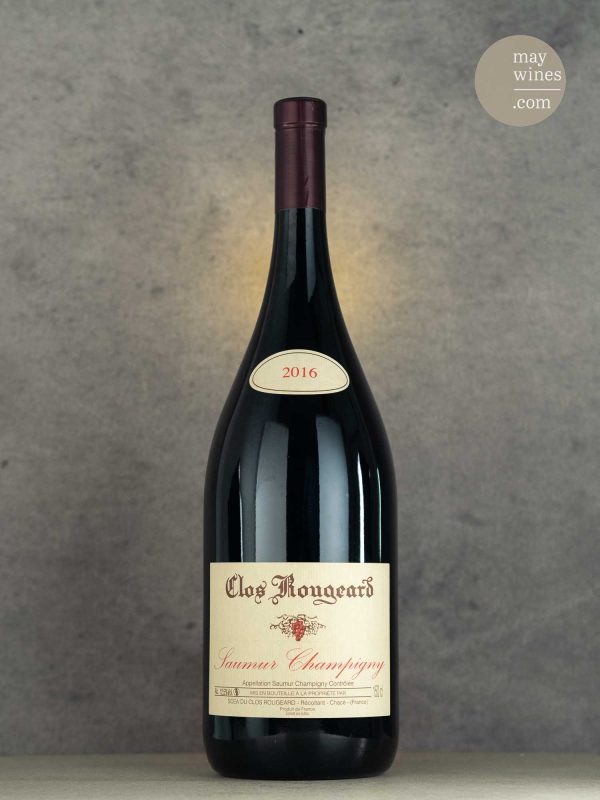
Clos Rougeard – A Loire Legend Through Changing Climate Epochs
Few addresses in France carry as uncompromising a mythology as Clos Rougeard. The estate in the village of Chacé, south of Saumur, has for decades stood as the undisputed reference point for Cabernet Franc on the middle Loire – a status that neither the takeover by the Bouygues family in 2017 nor the generational change in the cellar has diminished. Quite the opposite: the 2020 vintage shows that the house knows how to preserve its identity even under the extreme climatic conditions of recent years. Estate Manager Cyril Chirouze describes the year, in the domaine’s official documentation, as a “vintage outside the norm” that – much like 2003 – inscribes the inescapable reality of climate change into the tuffeau plateau of the Saumurois.
From Family Sanctuary to Quiet Institution
The house’s history stretches back to the 17th century; until 2017 the estate had remained in the hands of the Foucault family across eight generations. The mythology of the past four decades was shaped above all by the brothers Bernard (“Nady”) and Jean-Louis (“Charly”) Foucault, who took charge of the property from 1969 and, decades ahead of the mainstream natural wine movement, committed early to radically reduced yields, unsulphured vinification and a largely chemical-free approach to viticulture. Charly Foucault’s death in December 2015 set the transition in motion. In June 2017, Martin and Olivier Bouygues acquired the estate through their personal holding company SCDM.
The Bouygues brothers, known in France chiefly as industrialists in telecommunications and construction, had already acquired the Médoc estate Château Montrose in Saint-Estèphe in 2006, along with the neighbouring Château Tronquoy. Clos Rougeard is today part of the holding company Eutopia Estates, which also includes Domaine Rebourseau in Gevrey-Chambertin and the Virginia estate RdV Vineyards. Operational responsibility lies with Pierre Graffeuille, who is also Managing Director of Eutopia Estates; the vineyard and vinification in Chacé have been led since 2023 by Cyril Chirouze, formerly of Château des Jacques in Moulin-à-Vent. Notably, the new owners have explicitly ruled out expanding production – a stance that Simon Field MW describes as “refreshing”, particularly given the global demand.
Geography and Appellation: Between Tuffeau, Loire and Thouet
Clos Rougeard lies at the heart of the Saumur-Champigny appellation, a small but strategically important red-wine AOC on the southern bank of the Loire, east of the town of Saumur. The appellation covers around 1,500 hectares and extends across a plateau of tuffeau, a porous limestone from the Turonian stage of the late Cretaceous. This rock formation shapes both the underground cellars of the Saumurois and the freshness and mineral tension of the wines produced here.
The estate today farms around 16 hectares, spread across roughly 20 parcels around Chacé. This area is the result of targeted acquisitions: in 2023 and 2024 the team acquired an additional 2.6 hectares directly bordering the historic core sites Le Bourg and Les Poyeux. The domaine has thus expanded moderately from the historically documented roughly 11 hectares of the Foucault era, without abandoning its purist scope. Three red wines are made exclusively from Cabernet Franc, and one white wine from Chenin Blanc.
The Sites: Le Bourg, Les Poyeux, Le Clos and Brézé
The house’s four cuvées are strictly parcel-bound – with the exception of Le Clos, which is blended from several parcels:
- Le Bourg – the rarest and structurally most powerful cuvée, from a prime plot in the centre of Chacé surrounded on all sides by houses; around 3 hectares, a thin, clayey silt over Turonian limestone, with vines partly dating back to the early 20th century. First bottled separately in 1988.
- Les Poyeux – around 4.3 hectares on a gentle slope outside the village, aeolian sandy soils over limestone, a different microclimate and a more floral, silkier style.
- Le Clos – a blend of around 15 parcels that unites both soil types and, according to the house, undergoes two years of ageing; stylistically positioned between the two single sites.
- Brézé (Saumur Blanc) – a 1.5-hectare prime plot on the slope of Brézé, acquired in 1993, with more clay-rich soils and north-facing vines on a gentle incline. It is the house’s only white wine and has for decades been regarded as one of France’s most important expressions of Chenin Blanc.
Philosophy: Laissez-Faire with Surgical Precision
Work in the vineyard follows an approach that is, at its core, organic. Only copper and sulphur are used, in moderate doses; biodynamic elements are observed selectively, such as lunar and tidal rhythms, without the domaine applying the full range of biodynamic preparations. Cyril Chirouze sums up the house’s self-understanding succinctly: pioneering spirit, yes; missionary zeal, no.
In the cellar, a deliberately restrained approach to vinification dominates. The grapes are fermented in concrete tanks; extraction remains gentle – Chirouze favours mouillage du chapeau, a discreet moistening of the cap, over aggressive pump-overs. Ageing takes place for all wines in oak over two years, with clearly graduated profiles: Le Bourg in 80% new oak of local provenance, Les Poyeux in one-year-old barriques from Bordeaux (notably from Montrose, Angélus and Figeac), and Le Clos in still older wood. There is no fining and no filtration, and the use of sulphur remains minimal. The wines then age for several further years in bottle; release to the market takes place five to six years after the harvest. The underground tuffeau cellars beneath the estate maintain a constant temperature and have, since the Bouygues takeover, been supplemented by a modern extension housing new, smaller 46-hectolitre oak casks – a step intended to facilitate more nuanced parcel-by-parcel work.
The 2020 Vintage in the Saumurois
According to the domaine, the 2020 vintage ranks among the earliest ever documented in the Saumurois. Winter set the tone from the outset: with temperatures around three degrees above the seasonal average, it stands as the warmest winter since the early 20th century, with the vines never truly entering full dormancy. Rainfall in January and February was regular but modest in total. Spring brought an abrupt bud break, roughly a week ahead of the thirty-year average; April was exceptionally dry and sunny, and the vegetative cycle unfolded at a breathtaking pace, with no notable disease pressure. The first flowers appeared as early as the second half of May in the upper parcel of Les Poyeux and in the old vines of Le Bourg – a pace only surpassed, among comparable years, in 2007 and 2011.
June and early July brought a welcome slowdown, with cooler, wetter conditions that gave the team room for precise thinning. But the summer then brought several heatwaves with peaks around 38°C to Chacé. Localised, intensely concentrated thunderstorms saved the ripening process, delivering water to the sandy soils at key moments and preventing prolonged dry spells. The first Chenin grapes for Brézé were picked as early as 7 September, followed by the reds from 16 September, beginning with the old vines of Les Poyeux.
Stylistic Signature of the 2020 Wines
Stylistically, the domaine considers the vintage to show a register unusual for Clos Rougeard: spicy, dark-fruited aromas and broad, generous textures, making clear that the Cabernet Francs appear here in a warmer guise, without losing their stylistic identity. Brézé, in turn, presents itself decidedly ripe and with “Burgundian undertones”, while retaining the typical tension of the Brézé hillside site – that freshness which the north-facing limestone ridge preserves even in hot years.
In an earlier tasting of the 2020 Le Clos by Rebecca Gibb MW (Vinous), the wine was described as “extremely juicy and already approachable”, with fine tannin structure, smoky notes and a hint of tobacco typical of the site; alcohol on the 2020 Brézé remained a moderate 13% – a remarkable figure given the year’s climatic parameters. The wine received 92/100 points from Vinous.
A broad critical assessment of the full 2020 quartet is still to come, as the wines will only reach the market gradually over the course of 2025 and 2026. Anyone seeking to place the style should not read 2020 as a “classic” Clos Rougeard year, but rather – as Chirouze explicitly suggests – in comparison to 2003. Both vintages represent turning points, in which the Saumurois had to abandon its profile as a reliably cool, mineral-driven growing region, without the identity of its best producers being lost in the process.
Ageing Potential and Development
Clos Rougeard’s top wines rank among the longest-lived Cabernet Francs in the world. Le Bourg is traditionally credited with an ageing potential of 30 years and more, Les Poyeux at least 20 to 25 years, and Brézé too is among those Chenins capable of improving for two decades or longer. How the 2020s will fit within this framework cannot yet be conclusively assessed; the profile suggests they will be more approachable earlier than, say, the 2014s or 2010s, while still – thanks to the acidity preserved on the limestone sites – having the stamina to go the distance. Anyone buying these wines should consider decanting younger bottles and ideally wait at least eight to ten years before opening the great cuvées.
Market Prices and Allocation
The wines of Clos Rougeard have for years been largely inaccessible; many importers sell exclusively on allocation to regular customers. International market prices (Wine-Searcher, a compilation of relevant merchant and auction offers in Europe and the US, as of 2026) move broadly within the following ranges, ex-importer and ex-merchant, before tax:
- Saumur-Champigny Le Clos: roughly between 180 and 280 euros per bottle, depending on vintage and market
- Saumur-Champigny Les Poyeux: roughly between 280 and 380 euros per bottle
- Saumur-Champigny Le Bourg: roughly between 450 and 600 euros per bottle, with significant premiums for mature or particularly sought-after vintages
- Saumur Blanc Brézé: roughly between 290 and 400 euros per bottle
Mature bottles, particularly from the last vintages vinified personally by Charly Foucault (up to 2014), regularly achieve considerably higher values at the major auction houses – among them Baghera/wines, Sotheby’s and Christie’s; individual magnums of Le Bourg 1989 or 1990 can reach four figures per bottle. The 2020, depending on cuvée, is expected in limited allocations over the course of 2026 and will sit towards the upper end of the price bands cited above.
Standing in the Wine World: Why Clos Rougeard Matters
Clos Rougeard fulfils a rare function: the house has proven that Cabernet Franc on the middle Loire can reach a stature comparable to the first addresses of Bordeaux or Burgundy. The legend that a Le Bourg 1990 held its own against Pétrus, Trotanoy and Le Pin of the same vintage in a Parisian blind tasting is recounted in several sources and forms part of the domaine’s rise to international reference status; the exact circumstances of the tasting are recorded inconsistently in the serious literature. What is beyond dispute, however, is that Clos Rougeard has transformed perceptions of the entire Saumur-Champigny appellation – much as Château Rayas has shaped perceptions of Châteauneuf-du-Pape, a comparison Simon Field MW draws explicitly in his current profile.
Within the Loire hierarchy, Clos Rougeard stands today as a lone solitaire alongside the great addresses such as Domaine Huet, Nicolas Joly or Coulée de Serrant – not as part of a classified Cru, since the Loire’s Saumurois recognises neither Premier nor Grand Crus, but as the region’s de facto, market-driven “First Growth”. The comparison Field draws to Domaine de la Romanée-Conti and Château Rayas is not overstated, insofar as both houses cultivate a similar blend of scarcity, mythology and uncompromising quality.
Buying Recommendations
For collectors wishing to understand the house’s style, the recommended entry point is Le Clos, which already conveys a stylistic component of both great sites and tends to be more approachable earlier. Anyone wanting to explore the character of the single sites should taste a pair of Les Poyeux (floral, silky, sand-driven) and Le Bourg (structured, dense, mineral) side by side – ideally from the same vintage, since this direct comparison reveals the effect of the different soil types most vividly. Brézé is, finally, the indispensable reference for anyone wanting to experience Chenin Blanc at its very highest level. The 2020 is worth adding to a collection as a historic turning-point vintage; anyone seeking the classic, cooler reading of the house, meanwhile, should turn instead to 2014, 2017 or 2019.
FAQ
What is Clos Rougeard?
Clos Rougeard is a historic wine estate in the village of Chacé in the Saumur-Champigny appellation on the middle Loire. It is regarded as the reference address for Cabernet Franc in France and produces three red wines from Cabernet Franc – Le Clos, Les Poyeux and Le Bourg – as well as a white wine from Chenin Blanc called Brézé. The estate has belonged to the Bouygues family since 2017.
Who owns Clos Rougeard today?
Clos Rougeard was acquired in June 2017 by Martin and Olivier Bouygues through their personal holding company SCDM. Among their other holdings, the brothers also own Château Montrose in Saint-Estèphe. The estate is today part of the holding company Eutopia Estates and is run operationally by Pierre Graffeuille (Managing Director) and Cyril Chirouze (Estate Manager since 2023).
How large is Clos Rougeard?
The estate today covers around 16 hectares, spread across roughly 20 parcels around Chacé. The area grew in 2023 and 2024 through acquisitions from 11 to 16 hectares, with the additional parcels bordering directly onto the key sites of Le Bourg and Les Poyeux.
What wines does Clos Rougeard produce?
Clos Rougeard produces four wines: Saumur Blanc Brézé (Chenin Blanc, from a 1.5-hectare parcel on the slope of Brézé), along with the three Saumur-Champigny red wines Le Clos (a blend of around 15 parcels), Les Poyeux (around 4.3 hectares of sandy soils) and Le Bourg (around 3 hectares of clayey silt over limestone in the centre of Chacé). All the red wines are 100% Cabernet Franc.
What is the 2020 vintage like at Clos Rougeard?
According to the domaine, the 2020 vintage ranks among the earliest ever recorded in the Saumurois, shaped by an unusually mild winter, a rapid vegetative cycle and heatwaves around 38°C in summer. Cyril Chirouze, the house’s Estate Manager, describes 2020 as an exceptional vintage that, like 2003, embodies the reality of climate change. The Cabernet Francs show spicy, dark-fruited aromas and broad textures, while the Brézé presents a ripe, almost Burgundian profile at a moderate 13% alcohol with preserved acid tension.
How much does a bottle of Clos Rougeard cost?
Prices vary considerably by cuvée and vintage. Le Clos currently sits between roughly 180 and 280 euros, Les Poyeux between roughly 280 and 380 euros, Le Bourg between roughly 450 and 600 euros, and Brézé between roughly 290 and 400 euros per bottle, in each case net in international trade. Mature vintages from the Foucault era achieve considerably higher prices at auction.
How long can Clos Rougeard be cellared?
Le Bourg and Brézé have an ageing potential of 25 to over 30 years, Les Poyeux typically develops over 20 to 25 years, and Le Clos shows the earliest drinking window of the range at 15 to 20 years. The wines benefit from at least five to eight years of ageing after harvest and are only released by the house itself five to six years after picking.
Is Clos Rougeard an organic estate?
Clos Rougeard farms organically at its core, without formal organic certification. The estate uses only copper and sulphur in the vineyard, forgoes synthetic herbicides and pesticides, and observes biodynamic rhythms selectively, without applying the full range of biodynamic preparations. Cyril Chirouze describes this approach as a pioneering spirit without missionary zeal.
Why is Clos Rougeard so famous?
Clos Rougeard was the first estate to prove that Cabernet Franc from the Loire can compete in quality with the greatest red wines of Bordeaux. The legend of a Parisian blind tasting in which a Le Bourg 1990 reportedly held its own against Pétrus, Trotanoy and Le Pin continues to shape the house’s reputation to this day. Added to this is an uncompromising philosophy of minimal intervention, extremely low yields and long ageing periods, which has made the house the international reference point for the Saumurois.